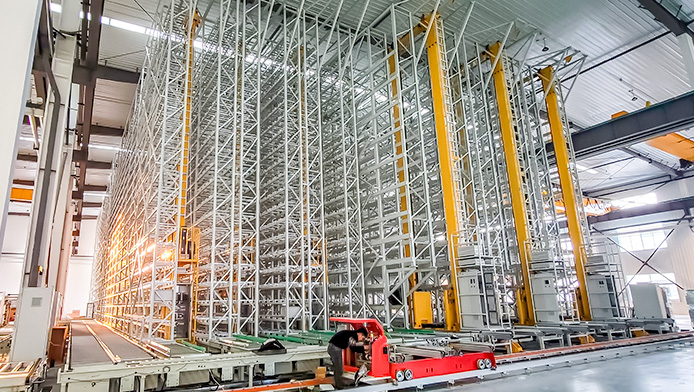
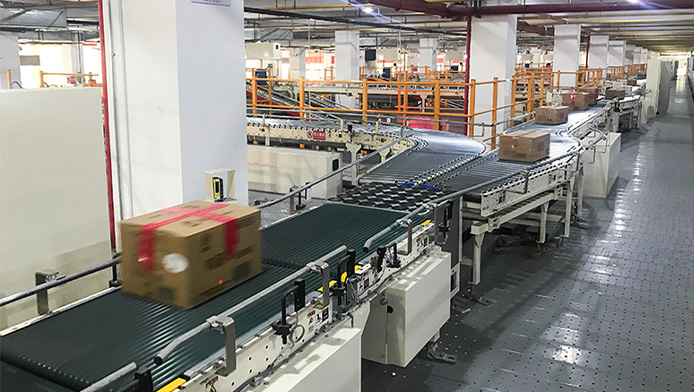
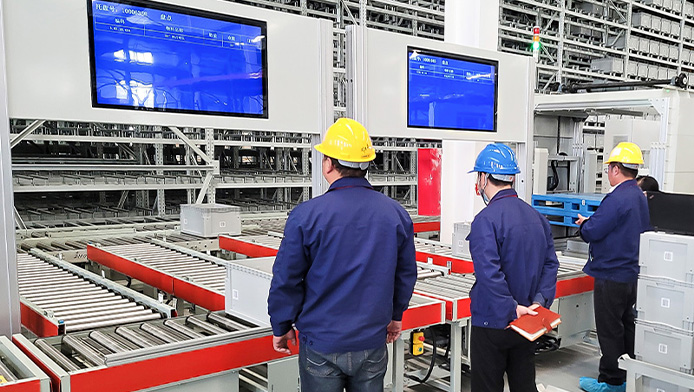
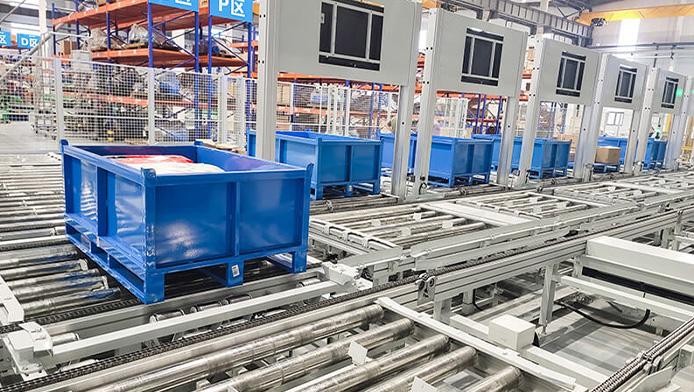
Automated warehouse storage stands as a critical factor for business success in 2026. Companies have embraced automated systems to boost operational efficiency and accuracy, responding to rapid e-commerce growth and evolving customer expectations. Labor shortages and rising labor costs push organizations toward automated warehouse solutions, which streamline complex tasks and support fast order fulfillment. The following table shows the global adoption of automated storage solutions:
|
Percentage of Warehouses |
Description |
|---|---|
|
86% |
Have AS/RS in place or are planning to implement it. |
Warehouse leaders recognize several drivers for this shift:
E-commerce growth demands faster, reliable delivery.
Automated warehouse systems reduce reliance on manual labor.
Automation enables scaling operations to match market expansion.
Automated warehouse technology delivers benefits that justify investment and create a strong foundation for future competitiveness.
Automated warehouse systems speed up order fulfillment, allowing businesses to meet customer demands for faster shipping.
Investing in automation reduces labor costs by minimizing the need for manual tasks, leading to significant savings.
Automation improves inventory accuracy by using real-time tracking, which helps prevent costly mistakes and stockouts.
Automated systems maximize storage space, allowing warehouses to store more items efficiently and reduce wasted space.
Companies that adopt automation can scale operations easily, adapting to market changes without major disruptions.

Warehouse automation transforms the speed of order processing. Investing in intelligent AS/RS equipment allows warehouses to move goods quickly and accurately. This technology effectively reduces the time workers spend searching for items. In a direct comparison, automated systems fulfilled five orders in just over three minutes, while manual processes took more than eight minutes for the same task. This means as/rs can complete orders more than twice as fast as traditional methods. The result is clear:
Automated systems: 5 orders in 3:13
Manual processes: 5 orders in 8:09
This dramatic improvement in efficiency allows companies to meet customer demands for faster shipping. Automating warehouses also means fewer delays and less time wasted. Businesses see higher productivity through technology, which leads to better customer satisfaction and increased sales.
Automation does more than speed up picking. It connects every part of the warehouse, from receiving to shipping. As/rs work with warehouse management systems to track inventory in real time. This integration ensures that every product moves smoothly through each stage. Automation replaces slow manual steps, which reduces bottlenecks and errors. As/rs improve storage efficiency by organizing goods in high-density layouts, making the best use of available space.
Companies that invest in warehouse automation see gains in operational efficiency. They experience higher throughput and more accurate order fulfillment. Automation supports storage efficiency by allowing as/rs to handle more items in less space. This approach increases productivity and reduces costs. As/rs play a key role in automating warehouses, driving efficiency and supporting business growth. By enhancing operational efficiency, companies stay competitive in a fast-changing market.

Warehouse automation transforms how companies manage labor costs. Automated storage and retrieval systems, or as/rs, handle repetitive and physically demanding tasks. These systems operate continuously, which means companies need fewer workers for manual picking, packing, and moving goods. As/rs allow businesses to reassign employees to higher-value activities, increasing overall productivity. Many organizations report significant savings because automation reduces overtime and reliance on temporary labor during peak seasons. When as/rs take over routine operations, companies see a direct drop in payroll expenses. This shift leads to better operational efficiency and supports long-term financial stability.
A closer look at cost-saving factors shows how automation impacts the bottom line:
|
Cost Saving Factor |
Description |
|---|---|
|
Labor Savings |
Reduced labor needs lead to significant long-term cost reductions. |
|
Higher Productivity |
Automation increases output and revenue by operating continuously. |
|
Fewer Errors |
Technology minimizes mistakes, reducing associated costs. |
|
Better Space Use |
Automated systems can optimize vertical space, lowering warehouse costs. |
Automation plays a key role in minimizing errors in order fulfillment. Automated picking and packing systems use advanced programming to select and package the correct items with high precision. As/rs verify each product against order details, ensuring accuracy at every step. This process reduces the number of incorrect shipments, which lowers return rates and eliminates extra costs like restocking and re-shipping. Companies benefit from enhanced data accuracy, which improves inventory control and reduces stockouts. Automation also minimizes human error, a major source of inventory mistakes. Improved order fulfillment accuracy leads to lower operational costs and higher customer satisfaction. By investing in warehouse automation, businesses achieve greater efficiency and maintain a competitive edge.

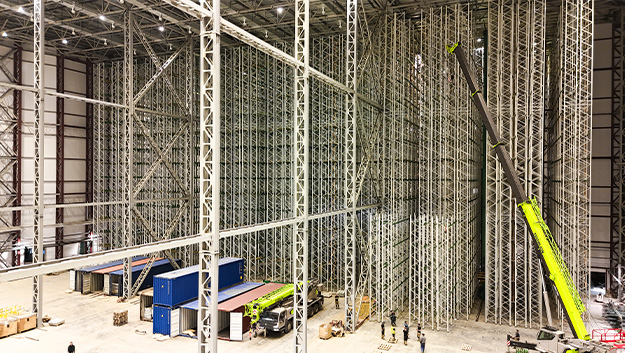
Automated storage and retrieval systems transform warehouse automation by maximizing storage space and optimizing space utilization. Traditional warehouses often waste valuable floor space with wide aisles and inefficient layouts. Automated storage and retrieval systems require minimal aisle width, allowing companies to maximize floor space utilization. These systems use advanced automation to organize inventory vertically and horizontally, increasing efficiency and productivity.
Automated storage and retrieval systems can optimize vertical space, making use of areas that manual operations cannot reach. Up to 60% of warehouse cubic volume may be empty air in traditional setups, but automation changes this. Automated storage and retrieval systems store pallets flush against each other, doubling storage capacity and improving floor space utilization.
The following table highlights the differences between traditional racking and automated storage and retrieval systems:
|
Aspect |
Traditional Racking |
Automated Storage and Retrieval Systems |
|---|---|---|
|
Required Aisle Width |
Wide aisles needed |
Minimal aisles required |
|
Storage Density |
Lower |
Higher |
|
Usable Floor Space |
Less efficient use |
More efficient use |
|
Vertical Space Utilization |
Limited |
Optimized |
Automated storage and retrieval systems deliver 60-80% improvement in space utilization. Vertical lift modules can achieve up to 85% space savings. Automation enables warehouses to maximize floor space utilization, increase efficiency, and support higher productivity.
Warehouse automation heavily relies on high-density mobile racking systems to increase efficiency and space maximization. These specific systems use advanced automation to store goods in extremely compact layouts. The SpeedCell system can increase storage density by up to 500%. Geek+ customers achieve three to five times greater storage density with robotic automation. High-density storage systems can boost capacity by as much as 85% compared to traditional methods.
Automated storage and retrieval systems allow pallets to be stored flush together.
High-density storage solutions increase usable storage density by up to 500%.
Automation supports flexible layouts and adapts to changing inventory needs.
Automated storage and retrieval systems help companies optimize space utilization and improve efficiency. Automation reduces wasted space, increases productivity, and supports warehouse growth. Automated storage and retrieval systems provide a foundation for efficient, scalable, and productive warehouse automation.

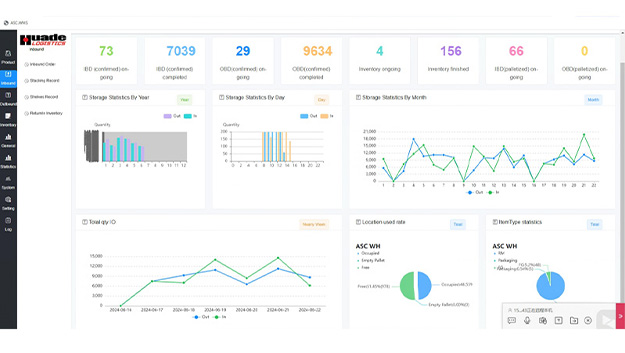
Automation has transformed how warehouses track inventory. Automated systems use advanced technology to monitor stock levels at every moment. Automated stock-scanning robots move through aisles, scanning items and updating records instantly. This process ensures that every product is accounted for, reducing the need for manual checks. Barcode tracking adds another layer of accuracy by linking each item to its digital record. Cloud-based inventory management platforms update information in real-time, so all departments see the same data.
Warehouses using DexoryView have achieved near-perfect inventory accuracy. Real-time data collection has reduced stock discrepancies by over 90%.
The following table shows how different automated methods impact inventory accuracy:
|
Method |
Impact on Inventory Accuracy |
|---|---|
|
Automated stock-scanning robots |
Ensures every item is accounted for, reducing reliance on manual checks. |
|
Barcode tracking |
Improves visibility, reduces picking errors, and speeds up order fulfillment. |
|
Cloud-based inventory management |
Updates in real-time, preventing miscommunications across departments. |
Automation supports improving inventory management by providing accurate, up-to-date information. Companies can make better decisions and avoid costly mistakes. Real-time inventory tracking helps improve inventory management and supports efficient warehouse automation.
Automated storage and retrieval systems, or as/rs, play a major role in increasing order picking accuracy. These systems use automation to guide workers or robots to the correct items. Automated picking reduces human error and ensures that each order contains the right products. As/rs verify each pick, which helps companies increase accuracy and reduce costly returns.
Automated storage and retrieval systems enhance picking accuracy by minimizing picking errors.
Automation allows warehouses to process more orders with fewer mistakes.
Automated systems support consistent quality and customer satisfaction.
Automation helps companies achieve higher accuracy and efficiency. By reducing picking errors, warehouses save money and build trust with customers. Automation and as/rs work together to create a reliable, high-performance warehouse environment.

Warehouse automation has transformed safety standards in modern facilities. Automated storage and retrieval systems bring products directly to ergonomic workstations. Workers no longer need to walk long distances or lift heavy items. This change reduces physical strain and lowers the risk of injury. Advanced equipment like heavy-duty Autonomous Mobile Robots (AMRs) follow programmed paths and avoid collisions, making high-traffic areas significantly safer. AI-powered monitoring systems detect hazards such as spills or improper lifting posture before incidents occur. Organizations using these technologies have reported injury reductions of up to 77%. In 2020, warehousing and storage workers experienced 24,900 injuries, with over 12,000 involving sprains or strains. Facilities that adopted AGVs saw a 60% drop in material handling injuries. Automation minimizes repetitive motions and physical stress, creating a safer environment for everyone.
Automated systems deliver products to workers, reducing travel and lifting.
Automated vehicles and AGVs avoid collisions and prevent accidents.
AI systems monitor for hazards and alert staff before injuries happen.
Automation also improves ergonomics in warehouse environments. Automated systems deliver goods at optimal heights, reducing the need for bending or stretching. Conveyor systems and AGVs handle heavy loads, so workers face less physical demand. These improvements help employees meet performance goals and minimize mistakes. Jobs become less physically taxing, which increases personal safety and job satisfaction. Automation allows a wider range of people, including those with physical limitations, to work in warehouses. This flexibility supports workforce diversity and helps companies fill roles in tight labor markets.
|
Automation type |
Ergonomic impacts and improvements |
|---|---|
|
Conveyor systems |
Reduce manual handling and transport, minimizing ergonomic strains and stresses. |
|
AS/RS systems |
Deliver products to pickers at ergonomic heights, reducing bending and lifting. |
|
AGVs |
Improve ergonomics by reducing manual handling of heavy loads and repetitive motions. |
Automation shifts employee roles toward higher-value tasks and skill development. Workers spend less time on repetitive labor and more time on engaging, specialized activities. Companies that invest in warehouse automation show they care about worker safety and well-being. This approach leads to higher morale and a more motivated workforce.
Modern warehouse automation supports seamless scalability by allowing companies to expand operations in phases. Many organizations begin with a single automated flow or pallet-level automation. This approach helps stabilize operations and builds internal confidence before scaling up. Companies often define the first phase of automation by operational maturity, not just ambition. They focus on strong inbound discipline, clean data, consistent packaging, and a well-functioning warehouse management system. These foundations make it easier to add more automation without causing major disruptions.
Automated storage and retrieval systems use modular designs. Businesses can add new modules or components as their needs grow. This flexibility means companies do not need to overhaul their entire system when expanding. They can integrate new technology smoothly, keeping daily operations running. The ability to expand in stages supports seamless scalability and reduces risk.
|
Feature |
Description |
|---|---|
|
Scalability and flexibility |
AS/RS systems can be easily scaled to accommodate growth in inventory and operations. |
|
Modular design |
Additional modules can be integrated without major disruptions, allowing for flexibility. |
Warehouse automation enables companies to adapt quickly to changing business needs. As demand increases, automated systems can scale up without interrupting workflow. Companies can start small and add components as needed, similar to building with blocks. This method supports seamless scalability and keeps costs under control.
|
Feature |
Description |
|---|---|
|
Ability to Scale Up |
ASRS can be expanded as business needs grow, starting small and adding components as needed. |
|
Easy expansion |
Similar to adding blocks to a Lego structure, the system can be modified without starting over. |
Companies that invest in supporting scalability without disruptions gain a competitive advantage. They can respond to market changes, seasonal peaks, and long-term growth with confidence. Automation ensures that expansion does not lead to downtime or operational setbacks. This approach makes warehouse automation a smart choice for businesses planning for the future.

Companies that invest in automation position themselves for future success. Modern warehouses now use advanced technologies to stay ahead. Autonomous Mobile Robots (AMRs) move goods efficiently and adapt to changes in demand. These robots help reduce bottlenecks and improve flexibility. IoT devices and sensors collect real-time data, allowing managers to monitor conditions and schedule predictive maintenance. This approach increases visibility and operational efficiency. AI-powered inventory management systems optimize stock levels and support better decision-making. These systems use demand forecasting and real-time tracking to keep inventory accurate.
Major e-commerce companies use robotics for picking, saving time and reducing manual labor.
Businesses that use AI-powered warehouse management systems report up to 30% fewer overstock situations and 25% better order accuracy.
Automation now connects with AI and IoT, making warehouses smarter and more responsive to market needs.
Warehouse automation helps companies maintain a competitive edge. The industry sees a growing trend toward integrating technology, which leads to higher efficiency. More than half of organizations plan to adopt artificial intelligence in the next five years. This shift will drive even greater improvements in operations. Sustainability also becomes a key focus. Many companies now implement energy-efficient solutions to lower emissions and reduce costs.
The integration of technology in warehouses continues to increase operational efficiency.
Artificial intelligence adoption is rising, with many organizations planning to use it soon.
Energy-efficient automation supports sustainability goals and cost savings.
Companies that embrace automation adapt quickly to changes in the market. They respond to customer demands faster and operate more efficiently. This future-ready approach ensures long-term growth and industry leadership.
Automated warehouse storage delivers seven essential benefits: higher accuracy, better space use, increased throughput, lower inventory costs, improved safety, labor savings, and flexibility. Companies like Walmart and Maersk have seen faster deliveries and better inventory control with automation. Many organizations overcome challenges by investing in training and using cloud-based tools. Automated storage and retrieval systems help businesses scale, reduce costs, and stay competitive. Leaders should evaluate how these advantages can transform their operations and support long-term growth.
An AS/RS uses machines and software to store and retrieve goods automatically. These systems help warehouses move products quickly and accurately. They reduce manual labor and improve efficiency.
Warehouse automation reduces physical strain on workers. Machines handle heavy lifting and repetitive tasks. Automated vehicles follow safe paths and avoid collisions. This technology lowers the risk of workplace injuries.
Small businesses can benefit from automation. Scalable systems allow companies to start small and expand as they grow. Automation helps improve accuracy, save space, and reduce costs, even in smaller operations.
Many automated systems use modular designs. Companies can add automation to existing layouts without major changes. This flexibility allows businesses to upgrade step by step.
Automation increases order accuracy by using sensors and software to guide picking. Machines verify each item before shipping. This process reduces errors and improves customer satisfaction.