For supply chain directors and warehouse managers, deciding to transition from a manual facility to a fully automated one is a critical milestone. While the benefits of automation are undeniable, the capital investment requires perfect timing. So, how do you know your operations have outgrown standard pallet racks?
As one of China's earliest pioneers in warehouse logistics, established in 1993, Huayide has guided countless businesses from their first traditional racking setups to world-class automated facilities. Based on decades of industry experience across logistics, manufacturing, and retail, here are the four unmistakable signs that it is time to upgrade to automated racking systems.
The most common trigger for warehouse automation is hitting the physical limits of your current footprint. Expanding a warehouse horizontally or acquiring new land is incredibly expensive and time-consuming.
If your warehouse ceiling is 10 meters or higher, but your forklifts can only safely reach 6 meters, you are wasting massive amounts of vertical real estate. An Automated Storage and Retrieval System (AS/RS) paired with high-bay racking can utilize up to 90% of your building's volume, often doubling or tripling your pallet capacity within the exact same footprint by eliminating the need for wide forklift aisles.
Warehouse labor is becoming harder to find, more expensive to retain, and prone to high turnover. Relying entirely on manual forklift operators not only increases payroll but also brings hidden costs: forklift maintenance, accidental rack damage, and employee safety risks.
Upgrading to intelligent warehousing solutions—such as multi-way shuttle systems or stacker cranes—drastically reduces your dependency on manual labor. Instead of hiring more workers during peak seasons, automation provides scalable, 24/7 continuous operation without fatigue.
In fast-moving industries like e-commerce, retail, and beverages, speed and accuracy are everything. If your order volume is increasing but your throughput (pallets moved per hour) is stagnating, your current infrastructure is a bottleneck.
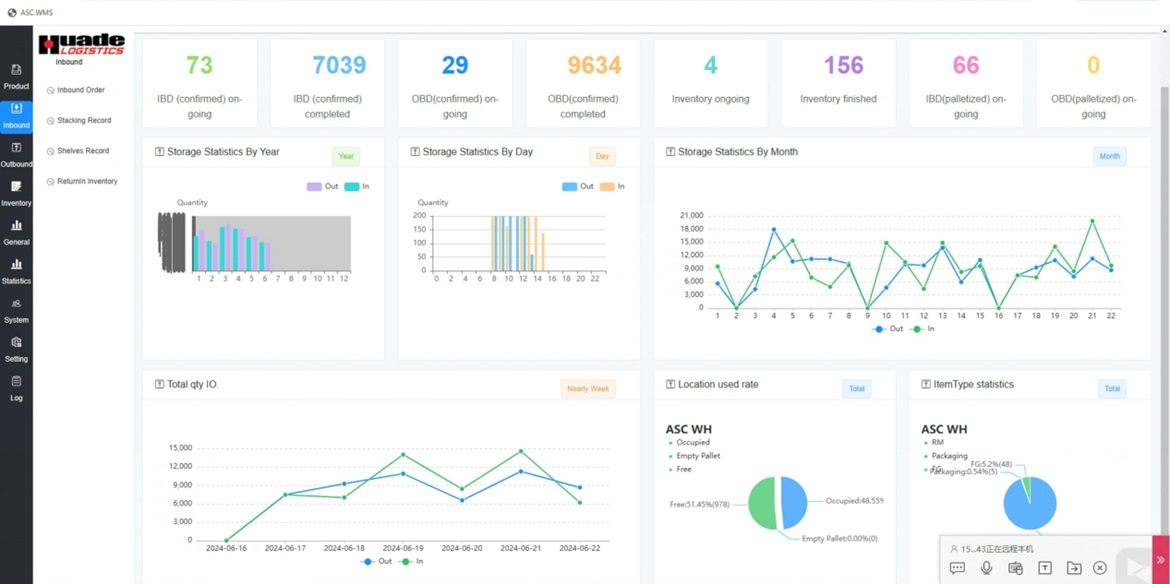
Manual picking is susceptible to human error, leading to incorrect shipments, returns, and damaged brand reputation. Automated systems utilize precise WMS (Warehouse Management System) integration, ensuring 99.9% inventory accuracy and strict First-In-First-Out (FIFO) material handling.
Certain industries inherently demand automation due to severe operating environments.
Cold Storage: Operating manual forklifts in sub-zero temperatures consumes immense energy and creates harsh working conditions for employees. High-density automated racking minimizes the area that needs to be cooled, slashing energy bills.
Chemicals & Hazardous Goods: Automation enables "goods-to-person" picking, keeping human workers at a safe distance from potentially dangerous chemical storage areas while preventing contamination.
Transitioning to intelligent storage is not just about buying steel and robots; it is about finding a partner who understands the entire evolution of warehousing. Contact Huayide’s engineering team today for a comprehensive warehouse audit and discover how our automated solutions can transform your ROI.